Searching for traces of writers and artists in Nice was disappointing; a book about the city had several addresses – Nabokov, Matisse, Alexander Herzen – all of which turned out either to be anonymous modern buildings or no buildings at all, and certainly without any plaque recording the great man’s presence. I did find a place where Nietzsche ‘first stayed in Nice’, and a hotel in the rue Gounod where both Chekhov and Lenin had been, but nothing more. Fictional characters were better remembered; over the door of a café where I had coffee was a plaque identifying the square where the hero and heroine of La douceur de la vie by Jules Romains fell in love. This novel, published in 1939, the 18th volume of his series Les hommes de bonne volonté, is currently out of print, and I felt guilty that the copy of it that I borrowed from the university library was lying unread at home.
Patrick Modiano is not out of print, and it was easy to find Dimanches d’août (1968), which is set mostly in Nice. It is a story which goes back and forth in time, with a narrator, about whom we are told that his name is not Henri, and Sylvia, with whom he elopes to Nice. She has a valuable diamond necklace, and you can tell this will end badly when the narrator picks her up wearing it at the station, and hopes no-one on the train has noticed it.
Instead of real writers on the streets, the story sends these fictional characters down the real streets near where I was staying in Nice; no need to search for them, they were all around. The narrator takes the rue Gounod to the station, then returns to the Jardin Alsace-Lorraine, exactly what I did myself. Alsace-Lorraine is a large square with beautiful trees, where the couple, who are running away, often sit. Later on the narrator sees lights in a window on the corner of the square and remembers Mme Efflatoun Bey, who lived there: ‘c’était un fantôme aimable, parmi les milliers d’autres fantômes qui peuplent Nice (…) Les fantômes ne meurent pas.’ Even Modiano’s invisible characters have memorable names; I too thought of Mme Efflatoun Bey every time I passed the square.
These streets – the rue de France, rue de la Buffa, boulevard Gambetta – which the narrator walks along, are residential, not far from the Promenade des Anglais but quiet, with a few hotels and some very ornate buildings. Wandering along them, especially in the evening, it was easy to imagine ghosts turning a corner just ahead. One evening, in the book, the couple sit at a terrace on the Promenade, like all those people through the years who have sat at that terrace: ‘réfugiés en zone libre, exilés, Anglais, Russes, gigolos, croupiers corses du Palais de la Méditerranée.’
There the narrator and Sylvia fall into conversation with Mr and Mrs Virgil Neal, who speak French with imperceptible foreign accents; he is American, she is English, they live in a villa called Château Azur and their car has a Corps diplomatique plaque on the back. An elusive pair, whose accents sometimes slip so they sound French, who seem interested in buying the diamond necklace. Later on they drive off, with Sylvia and the necklace, and vanish. The narrator searches for them in vain: their villa now belongs to the American Embassy where the Consul tells him that Mr and Mrs E. Virgil Neal lived there in the 1930s, when they had a company making a beauty product called Tokalon. It all sounds very convincing, and it is because, like the writers on the streets, it turns out that the Neals really existed.
I discovered this after I got home, in Mary Blume’s Côte d’Azur: Inventing the French Riviera (1992). Tokalon was a ‘moderately priced cream-based face powder […] in pretty round compacts with a Pierrot face painted on the lid,’ she writes, and Neal was not a member of the smart set, but a ‘gladsome parvenu’.
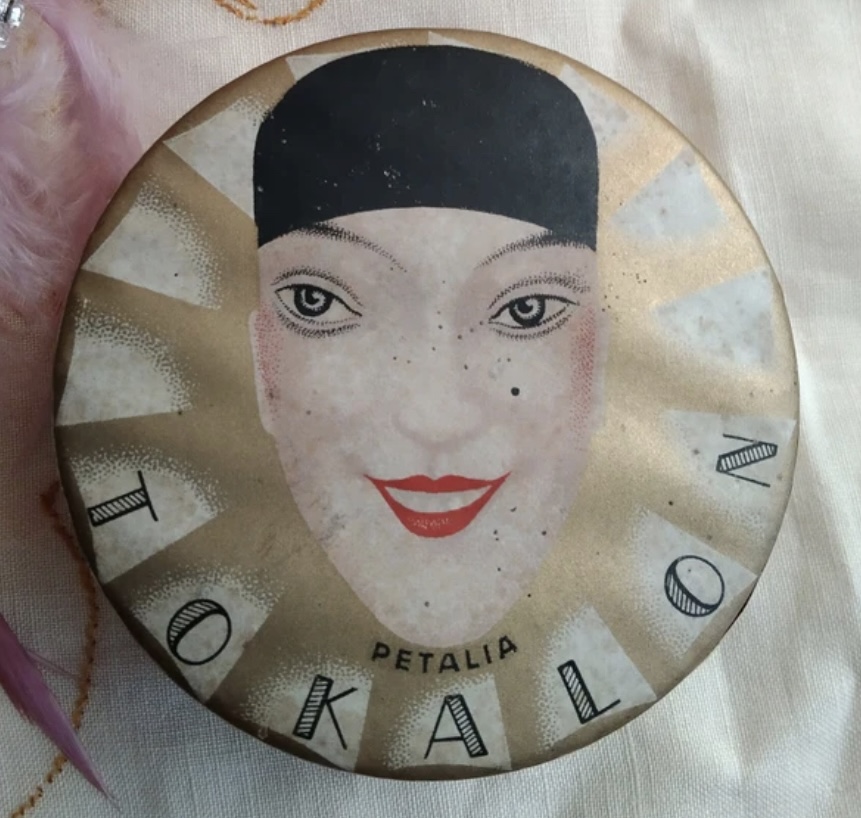
He has not been forgotten; the street where his Château d’Azur still stands is now called Avenue Virgile-Neal. Mr and Mrs Virgil Neal, driving off in their borrowed diplomat’s car fifty years after they had supposedly left the city, are revenants. Sylvia has been abducted – the moment when they drive off with her is very upsetting – and the narrator remains behind.
Nice does seem a place where strange things could happen, hidden away behind the glorious seafront and the joggers on the Promenade des Anglais, in the streets where the events of Dimanches d’août take place. But it is France, the country I left thirty-five years ago, and when I got to Nice I felt like an exile finally returning home. It was a place to recover, a place of refuge. And I didn’t see a single ghost.
 Mixed Feelings
Dear Sarah, thanks very much for sending me this personal rendering of a ‘place of refuge’, Nice.
<
div> I rather like the idea of fictional characters set